
Frequently Asked Questions
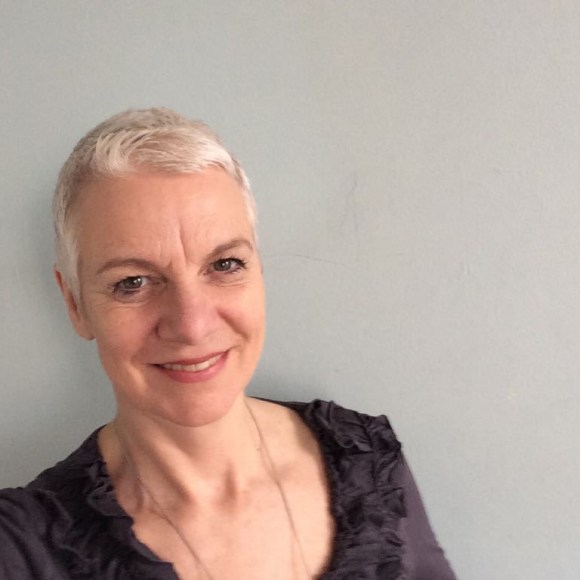
My name is Nic Whitworth a Mindfulness teacher offering a programme of Mindfulness interventions through courses, workshops and weekly sessions.
I also specialise in mindfulness training for those experiencing grief through bereavement and am passionate about developing this work, in particular with bereaved parents.
If you have any other questions about my courses and how mindfulness can help you please get in touch via my contact page.
Do you have some questions about mindfulness and how it can help you? Here are some answers to your frequently asked questions
I’m completely new to mindfulness, does that matter?
Not at all, classes and courses are suitable for complete newcomers and many participants have no previous experience.
I’ve done a mindfulness course before, is that OK?
Yes, the classes and courses are a great opportunity to develop and deepen your mindfulness practice
How will classes be delivered?
Currently, all classes will be delivered via Zoom video conferencing. To enable you to have a satisfactory experience using this platform, you will need a private space to practice where you will not be disturbed, good broadband connection, an iPad, pc or mobile and to have downloaded the Zoom app (free).
Do I need to book?
Yes – please see the booking information and terms of conditions. On receipt of your application, I will send you a brief application form asking for your contact details and previous experience.
Can I come to the classes if I’m very depressed, anxious or stressed?
We would like the classes to be as inclusive and accessible as possible.
If you are currently experiencing low mood or stress you may benefit from the class. However, there are certain conditions and circumstances where mindfulness practice may not be helpful, or where it may be better to wait before joining a class.
The classes are not suitable for those who are currently severely depressed, or experiencing acute stress or anxiety.
If you have recently experienced a major life event, a significance bereavement within the last year, or face significant challenges with your physical or mental health, please discuss this with the teacher, and please do follow the guidance about self-care at the start of every session.
If you have any physical or mental health condition which may affect your capacity to sit for any extended length of time, please inform the class teacher.
If you have doubts or questions about this please email us, before coming to a class, please contact me.
What if I’m taking medication?
That shouldn’t prevent you from coming to the class. It is, however, essential that you inform your medical practitioner /health professional if you intend to attend one of the courses, and do not vary any prescribed medication without first consulting your health professional or medical practitioner.
Do I need to wear anything special?
No – it’s helpful to wear something loose and comfortable and have a yoga mat and a light blanket to hand for your comfort.
Do I need to sit on the floor for the meditation practice?
No – mindfulness practice is about cultivation an awareness of being present with our internal and external experience – and it is fine to sit on a chair, on the ground supported by cushions. There are some aspects of the workshops and courses that involve some gentle physical movement and you will be encouraged to work within your own limits.
What is the purpose of formal meditation and how is it different to ‘informal’ mindfulness?
Meditation refers to the ‘formal’ aspects of mindfulness training, where we set our intention to sit, in stillness and cultivate stability and concentration, by directing our attention to the sensations of the body and the breath. In this way, we are harnessing the flavour of the present moment through these anchors. The word ‘cultivation’ is a more precise translation of the word ‘meditation’ – as it describes the process of attending to and nurturing our growing awareness, in contrast to an assumption that meditation is ‘a special state’ for a select few and something that we might fail at. None of us can fail at cultivation – it’s an innate capacity within us all, and simply takes time, patience and attention. As we practise, we become more familiar with the patterns of mind, sensations, and habitual behaviours that can get in our way of living happier, healthier lives.
Why do you refer to Mind Training?
Mind training is a skill that we cultivate – as if in the gym – we train the ‘muscle of mindfulness’ to notice when our minds wander away, in daydreaming, planning and rumination, distracted by sounds, lost in thought, – and we gently escort our attention back to the breath or the sensations of the body, our lived experience of the moment. As we would train a young and enthusiastic puppy, we gently encourage the attention to return each time, with kindness and patience.
Is Mindfulness Relaxing?
Mindfulness may or may not be relaxing – depending on the moment or the conditions that are around when we practice. It’s best to practice with no agenda or expectations. Whilst it is important to find a posture where your body feels comfortable and relaxed enough to sit for periods of time, the aim of mindfulness is not to become relaxed but to become awake. We notice when the mind feels dull, sharp, sleepy, alert, harmonious or distracted. It is important that our posture is comfortable enough to be abler to sit for periods of time.
Will Mindfulness change me?
It is possible to begin to notice subtle or strong changes through practice, but again, it’s also important to notice when we are driven by expectations to improve, to ‘change ourselves for the better’ and thus to experience frustration and disappointment when things don’t turn out the way we want. Changes can emerge through regular and practice of simple exercises and meditations, where the body/mind system begins to ‘know’ change at an experiential level, rather than a cognitive level. Being driven to change ourselves can express a deep striving, but we need to be aware of tendencies to set it as a goal.
Will I lose my edge at work if I practise Mindfulness?
We live in a culture where the pressure to achieve comes from within us and around us, cultivated over years of “getting on with it”, we can get caught up in driving ourselves to become more productive, successful, busy. This may result in driving ourselves in unhelpful ways that can result in burnout and dissatisfaction, and a sense that’ ‘life is the thing that happens when we are busy making other plans’. Mindfulness will not cause you to lose your edge. If anything, Mindfulness is like ‘tuning your instrument’ and can result in greater clarity, focus and satisfaction in the workplace.
Ordinary thoughts course through our mind like a deafening waterfall
Jon Kabat-Zinn, Molecular Biologist and Professor of Medicine at University of Massachusetts Medical School
Kabat-Zinn introduced meditation into mainstream medicine, founding the globally renowned Mindfulness-Based Stress Reduction Clinic in 1979. In order to feel more in control of our minds and our lives, to find the sense of balance that eludes us, we need to step out of this current, to pause, and, as Kabat-Zinn puts it, to “rest in stillness – to stop doing and focus on just being.”
Living in the moment involves a profound paradox: You can’t pursue it for its benefits. That’s because the expectation of reward launches a future-oriented mindset, which subverts the entire process. Instead, you just have to trust that the rewards will come.
Jay Dixit, Psychology Today
 Mindfulness for Everyday Living